[Robotics 6. 우리 가게 주방장은 로봇: 외식업계 자동화 혁명과 실무 도입 가이드 (The Chef in Our Kitchen is a Robot: Food Service Automation Revolution and Practical Adoption Guide)
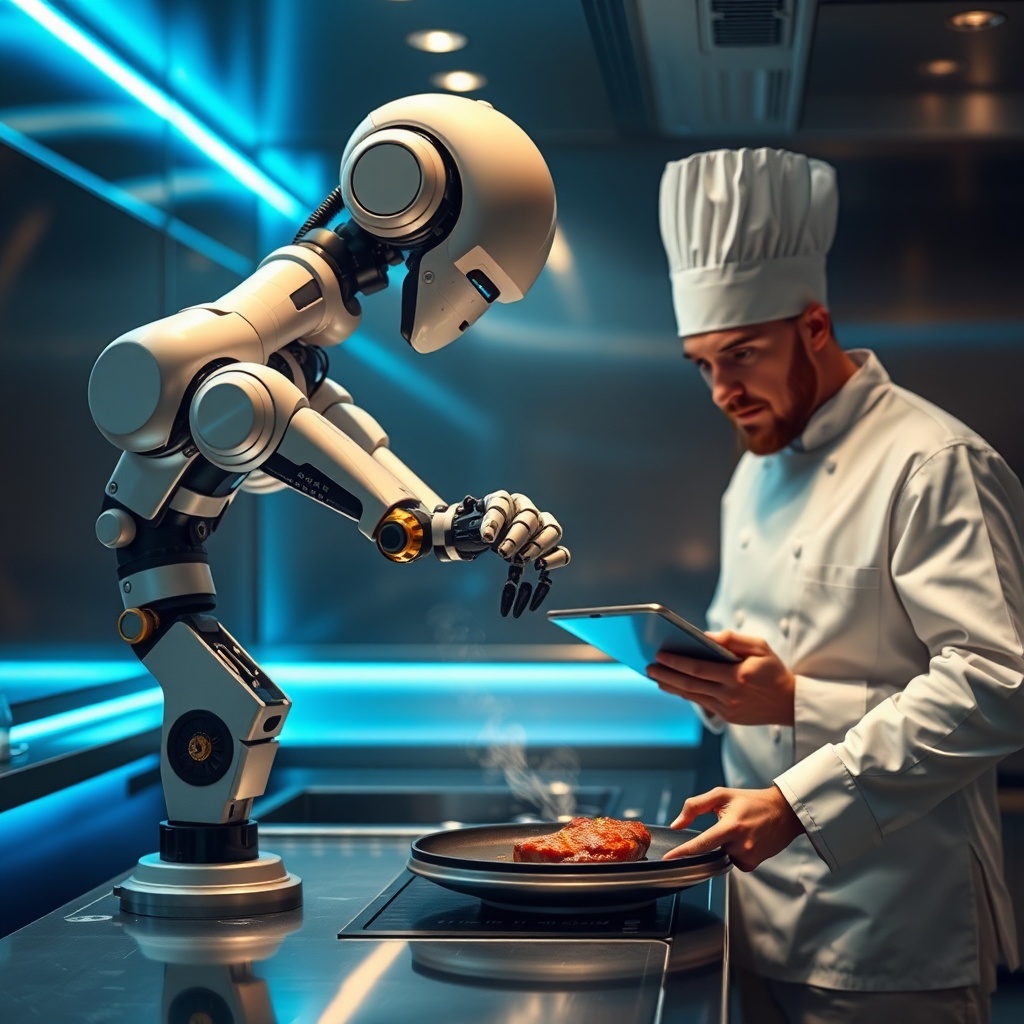
우리 가게 주방장은 로봇: 외식업계 자동화 혁명과 실무 도입 가이드
안녕하세요. 23년 차 IT 기획 팀장이자 전문 테크 리포터, 김 팀장입니다. 🤖
최근 몇 년간, 식당에 가면 우리를 맞아주는 서빙 로봇을 쉽게 볼 수 있었습니다. 하지만 이제 로보틱스는 단순히 음식을 나르는 ‘보조 역할’을 넘어, 주방의 핵심인 ‘조리 영역’을 장악하기 시작했습니다. 인력난과 임금 상승은 외식업계의 가장 큰 페인 포인트(Pain Point)죠. 로봇이 이 문제를 정말 해결해 줄 수 있을까요? 오늘 저는 현장 경험을 바탕으로, 단순 서빙을 넘어 조리, 설거지, 커피 제조까지 담당하는 푸드테크 로봇의 진화와 그로 인한 경제적, 고객 경험적 변화를 심층적으로 리포트 하겠습니다. 🎤
1. 단순 '기계'를 넘어 'AI 셰프'로: 서비스 로봇 2.0의 정의 💡
과거의 서비스 로봇은 정해진 경로를 따라 이동하거나 단순 반복 작업(예: 커피 내리기, 국물 따르기)만을 수행했습니다. 이는 프로그래밍된 매크로에 가까웠죠. 그러나 현재의 서비스 로봇 2.0, 즉 푸드테크 로봇은 AI와 머신러닝(ML)이 결합되어 환경 변화에 적응합니다. 예를 들어, 튀김 로봇은 기름 온도와 재료의 양, 습도 변화 등을 감지하여 조리 시간을 실시간으로 조정할 수 있습니다. 이것이 바로 '맛의 표준화'를 가능하게 하는 핵심입니다.
이제 로봇은 주방장님의 레시피 데이터와 노하우를 학습하여, 1년 365일 언제나 동일한 품질의 음식을 제공합니다. 이는 특히 프랜차이즈나 대규모 케이터링 서비스에서 품질 관리(QC) 측면의 엄청난 경쟁력으로 작용합니다.
2. 경제성 입증: 인력난 해소와 비용 절감의 마법 💰
푸드 로봇 도입은 이제 '멋진 기술'이 아니라 ‘생존을 위한 경제학’의 영역입니다. 제가 분석한 주요 사례들은 로봇 도입이 단순 인건비 절감을 넘어, 생산성 자체를 극대화했음을 보여줍니다.
| 분야 | 주요 기능 및 사례 | 경제적 효과 |
|---|---|---|
| 튀김/구이 (Flippy) | 버거 뒤집기, 감자튀김 조리 및 관리. 높은 열악 환경 대체. | 작업 효율 20% 증가, 유해 환경 제거, 조리 일관성 99% 달성. |
| 카페/음료 (바리스타 로봇) | 맞춤형 레시피, 24시간 무인 운영, 정밀한 추출. | 초기 투자 비용(CAPEX) 회수 기간 단축 (평균 1.5년), 인건비 80% 절감. |
특히, 로봇은 피크타임에도 지치지 않고, 인건비가 지속적으로 오르는 상황에서 예측 가능한 운영 비용을 제공합니다. 이는 소규모 자영업자에게도 더 이상 먼 이야기가 아닙니다.
3. 로보틱스 시장의 민주화: RaaS와 모듈화 🚀
① RaaS (Robotics as a Service)의 확산
과거 로봇 도입의 가장 큰 장벽은 높은 초기 투자 비용(CAPEX)이었습니다. 그러나 최근에는 구독 모델과 유사한 RaaS 모델이 대세로 자리 잡고 있습니다. 월정액을 내고 로봇을 임대하고, 유지보수와 소프트웨어 업데이트를 서비스 제공자가 책임지는 방식이죠. 이로 인해 초기 투자 부담이 획기적으로 낮아지면서, 중소형 매장들도 로봇 도입을 쉽게 검토할 수 있게 되었습니다.
② 모듈형 주방 시스템 (Modular Kitchen)
또 다른 주요 트렌드는 모듈화입니다. 예를 들어, 샐러드 제조 로봇, 볶음 요리 로봇, 면 요리 로봇 등 특정 기능만을 수행하는 로봇 팔 모듈이 등장하여, 외식업주는 자신의 매장 환경과 메뉴에 맞춰 필요한 로봇만 레고 블록처럼 조합할 수 있습니다. 이는 로봇 솔루션의 유연성과 확장성을 극대화합니다.
4. 사람의 역할 변화: '노동'에서 '고객 경험 설계'로 🧐
로봇이 조리 영역에 침투하면서 흔히 '일자리 위협'을 이야기하지만, 제가 보는 시각은 다릅니다. 로봇은 힘들고 위험하며 반복적인 3D 작업(Dirty, Difficult, Dangerous)을 대체합니다. 이로 인해 주방 인력은 단순 조리 작업에서 해방되어, 창의적인 메뉴 개발, 식재료 관리의 최적화, 그리고 무엇보다 고객과의 상호작용 및 서비스 품질 개선에 집중할 수 있게 됩니다.
로봇 도입은 인력 감축이 아닌, 인력의 '재배치 및 업스킬링' 전략으로 접근해야 합니다. 로봇을 효과적으로 운영하고 관리하는 '로봇 오퍼레이터' 또는 데이터를 분석하여 레시피를 개선하는 'AI 셰프 기획자'와 같은 새로운 역할이 중요해집니다.
5. 실무 적용 전략: 푸드 로봇 도입 시나리오 📋
로봇 도입 시, 단순 인건비 절감뿐만 아니라 다음 요소를 포함하여 투자 대비 효과(ROI)를 계산해야 합니다.
1. 일관성 가치: 로봇으로 인한 품질 균일화가 고객 만족도(재방문율)에 미치는 영향.
2. 위험 감소: 인적 오류(Human Error) 및 산업재해 위험 감소로 인한 잠재적 비용 절감.
3. 운영 효율: 피크타임 처리 능력(Throughput) 향상으로 인한 매출 증대분. RaaS 모델을 활용하면 월별 지출을 정확히 예측할 수 있어 재무 계획이 용이합니다.
푸드 로봇은 이제 더 이상 미래 기술이 아닙니다. 이미 수많은 외식업체에서 활발하게 도입되고 있으며, 시장에 먼저 진입하는 선점자만이 이득을 보는 구조가 형성되고 있습니다. 여러분의 비즈니스 모델 중 가장 노동집약적이거나 표준화가 필요한 영역부터 모듈형 로봇 도입을 테스트해보세요.
로보틱스는 이제 '선택'이 아닌 '생존'의 문제가 되었습니다. 특히 외식업계에서 로봇은 인력을 대체하는 존재가 아니라, 인간 직원의 역량을 극대화하는 스마트한 동료입니다. 오늘 배운 AI 셰프 로봇의 경제성과 실무 적용 전략을 바탕으로, 여러분의 현장을 다시 한번 혁신적으로 바라보는 계기가 되기를 바랍니다. 다음 리포트에서는 '배송 로봇의 최종 진화'에 대해 다루겠습니다. 기대해 주세요! 😊
The Chef in Our Kitchen is a Robot: Food Service Automation Revolution and Practical Adoption Guide
Hello. I’m Team Leader Kim, a 23-year IT Planning Team veteran and professional tech reporter. 🤖
In recent years, we’ve frequently encountered serving robots in restaurants. However, robotics is now moving beyond its 'auxiliary role' of merely delivering food and is beginning to dominate the kitchen’s core: the cooking process itself. Labor shortages and rising wages are the biggest pain points in the food service sector. Can robots truly solve this? Today, based on my field experience, I will provide an in-depth report on the evolution of FoodTech robots—which handle cooking, dishwashing, and coffee brewing—and the resulting economic and customer experience transformations. 🎤
1. From Simple 'Machine' to 'AI Chef': Defining Service Robotics 2.0 💡
Previous service robots only performed fixed route movements or simple repetitive tasks (e.g., pouring coffee, dispensing soup). These were closer to programmed macros. However, modern Service Robotics 2.0, or FoodTech Robotics, integrates AI and Machine Learning (ML) to adapt to environmental changes. For instance, a frying robot can detect changes in oil temperature, ingredient quantity, and humidity, adjusting the cooking time in real-time. This is the key element enabling 'taste standardization.'
Robots now learn the chef's recipe data and expertise, providing food of consistent quality 365 days a year. This offers an immense competitive advantage in Quality Control (QC), especially for franchises and large-scale catering services.
2. Proving Economic Value: The Magic of Labor Relief and Cost Reduction 💰
Adopting food robots is no longer about 'cool technology' but about the 'Economics of Survival.' The key cases I've analyzed show that robot adoption maximizes productivity itself, going beyond mere labor cost savings.
Crucially, robots never tire during peak hours and provide predictable operating costs in the face of continuously rising wages. This is no longer a distant concept, even for small business owners.
3. Democratization of the Robotics Market: RaaS and Modularization 🚀
① Expansion of RaaS (Robotics as a Service)
The biggest barrier to robot adoption used to be high initial Capital Expenditure (CAPEX). However, the RaaS model, similar to a subscription, is now becoming mainstream. Businesses pay a monthly fee to rent the robot, and the service provider handles maintenance and software updates. This drastically reduces the initial investment burden, making it easier for small and medium-sized stores to consider adoption.
② Modular Kitchen Systems
Another major trend is modularization. Robot arm modules that perform only specific functions, such as salad preparation, stir-frying, or noodle cooking, are emerging. Restaurant owners can combine the necessary robots like LEGO blocks, tailored to their store environment and menu. This maximizes the flexibility and scalability of the robotic solution.
4. Transformation of Human Roles: From 'Labor' to 'Customer Experience Design' 🧐
While the intrusion of robots into the cooking area often raises concerns about 'job threats,' my perspective is different. Robots replace the difficult, dangerous, and repetitive 3D tasks. This frees up kitchen staff from simple cooking tasks, allowing them to focus on creative menu development, ingredient management optimization, and, above all, customer interaction and service quality improvement.
Robot adoption must be approached as a strategy for 'workforce reallocation and upskilling,' not simply staff reduction. New roles, such as 'Robot Operators' who manage robots effectively, or 'AI Chef Planners' who analyze data to refine recipes, become crucial.
5. Practical Application Strategy: Food Robot Adoption Scenario 📋
When adopting robots, calculate the Return on Investment (ROI) by including the following factors, not just simple labor cost savings:
1. Consistency Value: The impact of quality uniformity (due to robots) on customer satisfaction (and repeat visits).
2. Risk Mitigation: Potential cost savings from reducing human error and industrial accidents.
3. Operational Efficiency: Revenue growth resulting from increased throughput during peak hours. Utilizing the RaaS model makes financial planning easier by allowing precise prediction of monthly expenditures.
Food robots are no longer future technology. They are actively being adopted by countless food service businesses, and a structure is forming where only the early entrants gain the advantage. Test modular robot adoption starting with the most labor-intensive or standardization-required areas of your business model.
Robotics has become a matter of 'survival,' not 'choice.' Especially in the food service industry, robots are not replacing workers; they are smart colleagues who maximize the capabilities of human staff. I hope this report on the economics and practical application strategies of AI chef robots inspires you to look at your operations through a lens of revolutionary change. In the next report, we will cover the 'Final Evolution of Delivery Robots.' Stay tuned! 😊
댓글
댓글 쓰기