[History] 27. 나폴레옹 대제국을 무너뜨린 진흙 장군의 비밀: 혹한보다 강력했던 러시아의 숨겨진 무기 (The Secret of the Mud General Who Toppled Napoleon's Grand Empire: Russia's Hidden Weapon More Potent Than the Bitter Cold)
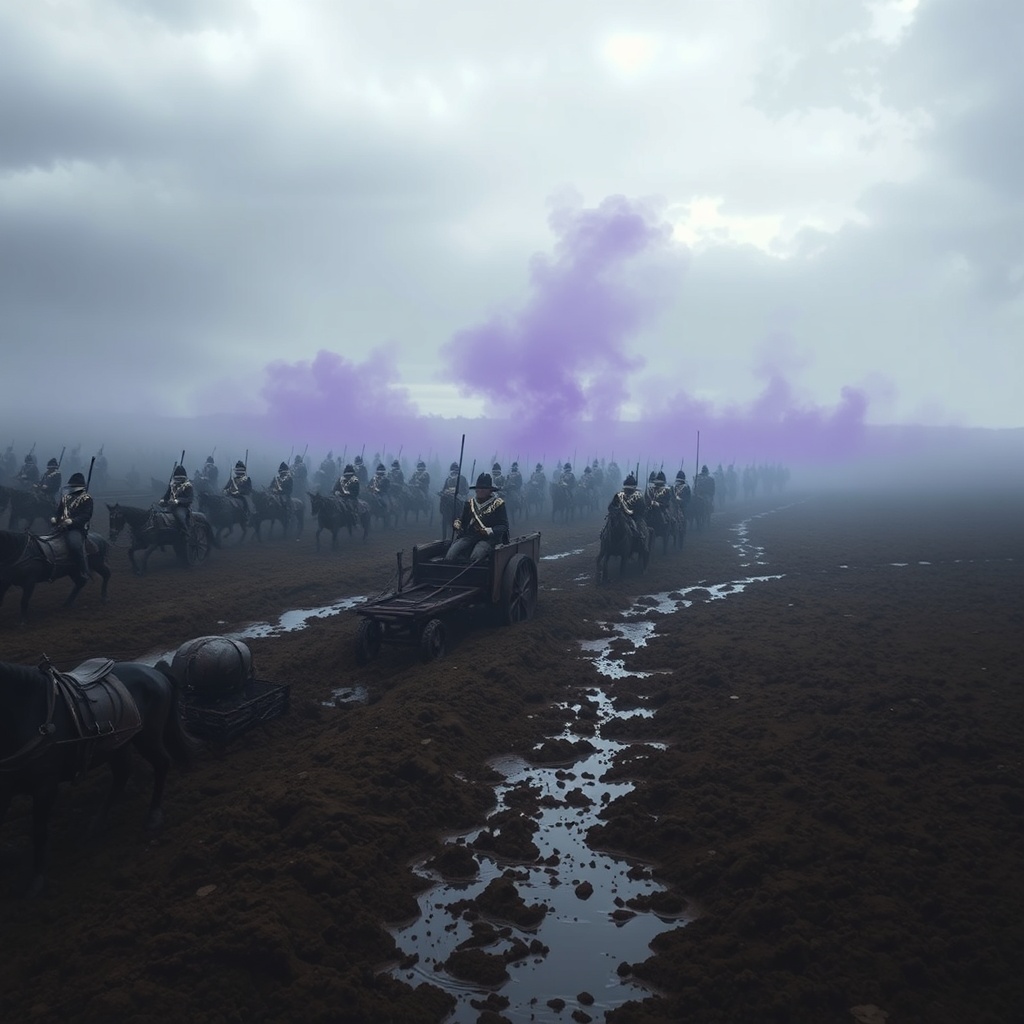
프랑스의 영웅, 나폴레옹 보나파르트. 그가 유럽 대륙을 제패하며 승승장구하던 중, 그의 불패 신화에 종지부를 찍은 결정적인 사건이 있었으니, 바로 1812년 러시아 원정입니다. 우리는 보통 이 원정의 실패 원인으로 혹독한 러시아의 추위와 러시아군이 사용한 무자비한 청야전술을 꼽습니다. 하지만 제가 오늘 여러분께 들려드릴 이야기는 조금 다릅니다. 혹한과 청야전술보다 더 은밀하고, 더 집요하게 나폴레옹 군대의 발목을 잡았던 '진정한 적'에 관한 것입니다. 과연 그 정체는 무엇이었을까요? 🤔
1. 서막: 유럽을 뒤흔든 황제의 야망 🌍
1812년, 나폴레옹은 대륙 봉쇄령을 어긴 러시아를 응징하기 위해 60만 대군을 이끌고 러시아 원정에 나섭니다. 그는 유럽 전체를 통합하려는 야심을 품고 있었고, 러시아는 그 야망의 마지막 걸림돌이었습니다. 역사상 유례없는 대규모 원정군이 국경을 넘으며, 나폴레옹의 병사들은 승리에 대한 확신과 황제에 대한 맹목적인 충성심으로 가득 차 있었습니다. 그들은 자신들이 곧 모스크바에 입성하여 모든 것을 끝낼 것이라고 믿었죠.
2. 거대한 적, 혹은 예상치 못한 아군? '라스푸티차'의 등장 🌧️
하지만 러시아는 나폴레옹에게 예상치 못한 복병을 숨겨두고 있었습니다. 바로 러시아의 지형과 기후가 만들어낸 '자연 장군'이었습니다. 특히, 봄과 가을 러시아를 지배하는 지독한 진흙탕, 즉 '라스푸티차'(Rasputitsa)는 나폴레옹의 정교한 군사 전략에 치명적인 균열을 가져왔습니다. 당시 나폴레옹 군대는 하루에도 수많은 보급품을 필요로 했습니다. 병사들의 식량, 말들의 사료, 대포알, 화약 등 120톤에 달하는 물자를 매일 조달해야 했죠. 이 모든 것이 수천 대의 마차와 수십만 마리의 말에 의존하고 있었는데, 진흙탕은 이 모든 시스템을 마비시키는 주범이 됩니다.
라스푸티차(Rasputitsa)란? 러시아어에서 '길 없는 때', '도로가 엉망이 되는 때'를 의미합니다. 봄철 해빙기와 가을철 우기 때 러시아, 벨라루스, 우크라이나 등 동유럽 지역의 비포장 도로가 질퍽한 진흙탕으로 변하는 현상입니다. 이 진흙탕은 과거 군사작전에 엄청난 영향을 미쳤습니다.
3. 나폴레옹 군대의 악몽: 진흙탕 속의 고뇌 💥
나폴레옹은 1812년 6월 말, 비가 많이 내리는 시기에 러시아로 진격했습니다. 시작부터 진흙은 군대의 진격을 방해했습니다. 마차는 진흙에 빠져 움직이지 못했고, 병사들은 무거운 장비를 짊어지고 진흙탕을 헤쳐 나가야 했습니다. 하루 20~30km를 행군하던 속도는 10km 미만으로 떨어졌고, 병사들의 사기는 바닥으로 추락했습니다. 무엇보다 치명적인 것은 보급품 수송이 거의 불가능해졌다는 점입니다. 식량과 탄약은 제때 도착하지 못했고, 수십만 마리의 말들은 먹이를 구하지 못해 진흙탕 속에서 비참하게 죽어갔습니다. 기병 전력의 급격한 약화는 나폴레옹에게 엄청난 타격이었습니다. 이미 혹한이 오기 전부터 진흙은 나폴레옹 군대를 서서히 고사시키고 있었던 것입니다.
라스푸티차 (Rasputitsa) 📜
1812년 나폴레옹의 러시아 원정을 좌절시킨 숨겨진 '자연 장군'. 도로를 질퍽한 진흙탕으로 만들어 보급을 마비시키고 군대의 기동력을 앗아갔으며, 최종적으로 혹한에 노출되는 시간을 늘려 나폴레옹 군대를 패퇴로 이끈 주범 중 하나입니다.
4. 청야전술과 혹한, 그리고 진흙의 삼중주 ❄️🔥
러시아 원수 미하일 쿠투조프는 나폴레옹의 진격을 늦추기 위해 청야전술을 펼쳐 마을과 보급품을 불태웠습니다. 이는 나폴레옹 군대를 더욱 굶주리게 만들었습니다. 하지만 이 전술이 효과를 발휘할 수 있었던 것도 바로 라스푸티차 덕분이었습니다. 진흙탕 때문에 프랑스군이 느리게 움직이자, 러시아군은 충분한 시간을 벌어 후퇴하고 청야전술을 수행할 수 있었습니다. 그리고 마침내 10월 중순, 러시아의 혹독한 겨울이 시작되면서 나폴레옹의 악몽은 절정에 달합니다. 보급품은 진흙에 갇혀 도착하지 못하고, 병사들은 추위와 굶주림에 쓰러져갔습니다. 즉, 진흙은 청야전술과 혹한이라는 두 개의 거대한 적이 제 기능을 다하도록 돕는 보조자이자, 그 자체로 치명적인 '숨겨진 적'이었던 것입니다.
| 주요 실패 요인 | 특징 | 나폴레옹 군대에 미친 영향 |
|---|---|---|
| 혹한 | 영하 30도 이하의 극심한 추위 | 동사, 동상, 사기 저하로 인한 전력 약화 |
| 청야전술 | 러시아군의 물자 소각 및 후퇴 | 프랑스군의 보급품 고갈 가속화 |
| 라스푸티차 | 봄/가을의 질퍽한 진흙탕 도로 | 보급 지연, 기동력 상실, 탈진, 혹한 노출 시간 증가 |
5. 역사의 조연, 진흙 장군이 남긴 교훈 💡
나폴레옹의 러시아 원정은 단지 혹한이나 뛰어난 전략에 의해 실패한 것이 아니었습니다. 러시아의 '진흙 장군', 즉 라스푸티차는 보급로를 끊고, 군대의 기동력을 앗아가며, 병사들의 사기를 꺾는 등 치명적인 역할을 했습니다. 이는 아무리 위대한 전략가라도 자연의 힘 앞에서는 무력할 수 있음을 보여주는 사례입니다. 또한, 군사 작전에서 보급망의 안정성이 얼마나 중요한지를 여실히 보여줍니다. 우리가 미처 주목하지 못했던 작은 요소들이 역사의 흐름을 완전히 바꿔놓을 수 있다는 것, 이것이 바로 '역사의 조연들' 시리즈를 통해 전하고 싶은 메시지입니다.
자주 묻는 질문 (FAQ) ❓
나폴레옹의 러시아 원정과 라스푸티차에 대해 더 궁금한 점이 있으신가요? 몇 가지 질문에 답해드립니다.
- Q: 라스푸티차가 러시아에만 있는 현상인가요?
- A: 라스푸티차라는 명칭은 주로 동유럽 평원 지역, 특히 러시아와 구소련 연방 국가들에서 특징적으로 나타나는 현상을 지칭합니다. 하지만 유사한 형태의 진흙탕 도로는 전 세계 습한 기후 지역이나 비포장 도로가 많은 곳에서 찾아볼 수 있습니다. 다만 이 지역에서는 광활한 평원과 낮은 지대가 겹쳐 그 영향이 더 두드러집니다.
- Q: 다른 역사 속에서도 라스푸티차가 영향을 미친 경우가 있나요?
- A: 네, 가장 대표적인 사례로는 제2차 세계대전 중 독일의 바르바로사 작전을 들 수 있습니다. 1941년 여름, 파죽지세로 소련을 침공하던 독일군은 가을의 라스푸티차에 발목을 잡혔습니다. 진흙탕은 독일군의 전차와 차량의 진격을 늦추고 보급에 막대한 지장을 주어, 소련군이 방어선을 재정비하고 혹한에 대비할 시간을 벌어주었습니다. 이는 나폴레옹 시대와 유사하게 자연이 전쟁의 흐름을 바꾼 중요한 예시입니다.
나폴레옹의 비극은 자연의 힘 앞에 인간의 오만이 얼마나 무력한지 보여주는 생생한 교훈을 남겼습니다. 진흙탕 속에서 허우적대던 수십만 병사들의 모습은 역사 교과서 한 줄로는 담을 수 없는 비극적인 현실입니다. 이처럼 사소해 보이는 요소 하나가 역사의 물줄기를 통째로 바꾸기도 합니다. 여러분이 알고 있는 또 다른 '역사의 조연'이 있다면 댓글로 자유롭게 의견을 나눠주세요! 다음 이야기에서 또 다른 숨겨진 역사를 찾아뵙겠습니다! 😊
The Mud General Who Stopped Napoleon: A Foe More Terrifying Than Scorched Earth and Bitter Cold (English) 📜
Napoleon Bonaparte, the hero of France. As he conquered the European continent with successive victories, a pivotal event put an end to his myth of invincibility: the Russian Campaign of 1812. We usually attribute the failure of this campaign to Russia's harsh cold and the ruthless scorched-earth tactics employed by the Russian army. However, the story I'm about to tell you today is a little different. It's about a 'true enemy' that was more subtle and persistent than the bitter cold and scorched-earth tactics, relentlessly hindering Napoleon's army. What exactly was its identity? 🤔
1. Prologue: The Emperor's Ambition Shakes Europe 🌍
In 1812, Napoleon led a 600,000-strong army to invade Russia to punish it for violating the Continental System. He harbored ambitions of uniting all of Europe, and Russia was the last obstacle to that ambition. As an unprecedentedly large expeditionary force crossed the border, Napoleon's soldiers were filled with confidence in victory and blind loyalty to the Emperor. They believed they would soon enter Moscow and put an end to everything.
2. A Great Foe, or an Unexpected Ally? The Appearance of 'Rasputitsa' 🌧️
However, Russia held an unexpected challenge in store for Napoleon: a 'natural general' created by its unique geography and climate. In particular, the terrible mud, known as 'Rasputitsa', that dominated Russia in spring and autumn, created a fatal crack in Napoleon's meticulously planned military strategy. At that time, Napoleon's army required vast amounts of supplies daily. They needed to procure 120 tons of provisions every day, including food for soldiers, fodder for horses, cannonballs, and gunpowder. All of this depended on thousands of wagons and hundreds of thousands of horses, and the mud became the primary culprit in paralyzing this entire system.
What is Rasputitsa? In Russian, it means 'time without roads' or 'when roads become impassable'. It is a phenomenon where unpaved roads in Eastern European regions such as Russia, Belarus, and Ukraine turn into muddy quagmires during the spring thaw and autumn rainy season. This mud had a tremendous impact on past military operations.
3. The Nightmare of Napoleon's Army: Anguish in the Mire 💥
Napoleon advanced into Russia in late June 1812, during a period of heavy rain. From the very beginning, the mud impeded the army's advance. Wagons got stuck and couldn't move, and soldiers had to carry heavy equipment through the quagmire. The marching speed, which used to be 20-30 km a day, dropped to less than 10 km, and soldiers' morale plummeted. Most critically, the transport of supplies became almost impossible. Food and ammunition did not arrive on time, and hundreds of thousands of horses starved to death miserably in the mud. The drastic weakening of the cavalry force was a huge blow to Napoleon. Even before the bitter cold arrived, the mud was slowly suffocating Napoleon's army.
Rasputitsa 📜
The hidden 'natural general' that thwarted Napoleon's Russian campaign in 1812. It turned roads into muddy quagmires, paralyzing supplies, stripping the army of its mobility, and ultimately increasing their exposure to the bitter cold, making it one of the main culprits in Napoleon's army's defeat.
4. Scorched Earth, Bitter Cold, and the Triple Threat of Mud ❄️🔥
Russian Field Marshal Mikhail Kutuzov employed scorched-earth tactics, burning villages and supplies to slow Napoleon's advance, which further starved Napoleon's army. However, these tactics were effective precisely because of Rasputitsa. As the French army moved slowly due to the mud, the Russian forces gained enough time to retreat and execute their scorched-earth strategy. Then, in mid-October, Russia's brutal winter began, bringing Napoleon's nightmare to its peak. Supplies were stuck in the mud and could not arrive, and soldiers succumbed to cold and hunger. In essence, the mud was an assistant that allowed the two great enemies—scorched earth and bitter cold—to function effectively, and in itself, a fatal 'hidden enemy'.
| Major Causes of Failure | Characteristic | Impact on Napoleon's Army |
|---|---|---|
| Bitter Cold | Extreme cold below -30 degrees Celsius | Weakening of forces due to freezing, frostbite, and low morale |
| Scorched Earth Tactics | Russian army's destruction of supplies and retreat | Accelerated depletion of French army's supplies |
| Rasputitsa | Muddy roads in spring/autumn | Supply delays, loss of mobility, exhaustion, increased exposure time to cold |
5. The Lesson from History's Supporting Actor, The Mud General 💡
Napoleon's Russian campaign did not fail solely due to the bitter cold or brilliant strategy. Russia's 'Mud General,' Rasputitsa, played a critical role by cutting off supply lines, stripping the army of its mobility, and breaking the morale of the soldiers. This serves as an example that even the greatest strategists can be helpless against the power of nature. Moreover, it vividly demonstrates how crucial the stability of supply lines is in military operations. The message we wish to convey through the 'Supporting Actors of History' series is that small, overlooked elements can completely change the course of history.
Frequently Asked Questions (FAQ) ❓
Do you have more questions about Napoleon's Russian Campaign and Rasputitsa? Here are some answers.
- Q: Is Rasputitsa a phenomenon unique to Russia?
- A: The term 'Rasputitsa' primarily refers to a characteristic phenomenon observed in the Eastern European plains, particularly in Russia and former Soviet Union countries. However, similar forms of muddy roads can be found in humid climate regions worldwide or in areas with many unpaved roads. In this region, however, the vast plains and low-lying areas combine to make its impact more pronounced.
- Q: Has Rasputitsa influenced other historical events?
- A: Yes, the most prominent example is Operation Barbarossa during World War II. In the summer of 1941, the German army, invading the Soviet Union with overwhelming force, was halted by the autumn Rasputitsa. The muddy conditions slowed the advance of German tanks and vehicles and caused immense logistical problems, giving the Soviet army time to regroup their defenses and prepare for the bitter cold. This is an important example, similar to Napoleon's era, where nature altered the course of war.
Napoleon's tragedy left a vivid lesson on how helpless human arrogance can be in the face of nature's power. The sight of hundreds of thousands of soldiers struggling in the mud is a tragic reality that cannot be captured in a single line of a history textbook. Thus, even a seemingly minor element can completely change the course of history. If you know of any other 'supporting actors of history', feel free to share your thoughts in the comments! We'll be back with another hidden historical tale in the next story! 😊
댓글
댓글 쓰기